The newspaper magazine racks are empty. The stationery shelves too. The untidy pile of postal parcels gone. Even the little drinks fridge in the corner has been taken away, leaving behind carpet a darker grey.
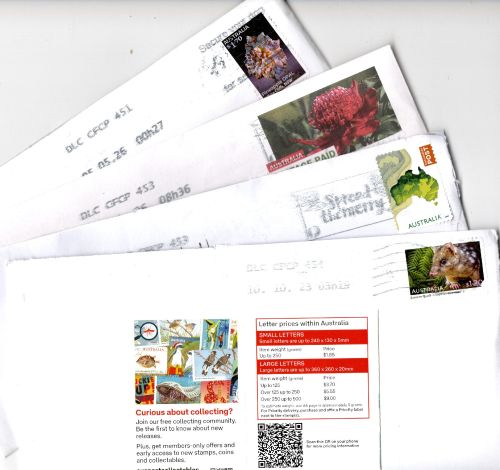
The signage for lotto, with its hopeful rainbow, is still there, and the forms that you fill in for a shot at a better life. The cash drawer and keyboard are silent; the computer monitor blank. At least there is still a red postal box out the front, though nowhere now to buy stamps for letters.
Officially the shop was an LPO. Licensed Post Office. I preferred ‘local’ and ‘little’. And ‘loved’, for it was so friendly and handy and personable.
David and Frances had kept the business going for 20 years in this small suburb only half-a-dozen train stops from the city. I only moved into the area three years ago but quickly sensed the value of the struggling outpost, so to speak.
A tall old man with a long limp would make his way down the street to buy his Saturday paper, pausing and resting at the automatic sliding door. A stooped woman pushing a walking frame, clutching a purse for her little bit of lotto. Railway workers in orange vests popping in to buy Best Bets, the racing guide. A musician posting carefully packaged vinyl albums.
David was my personal ATM. I would ask if I could take out some cash and he would direct me to insert my card into the reader on the counter. He would tap on his keyboard and count out the cash in front of me, note by note.
A plain, simple transaction but so much more human than standing at a machine at a wall on a footpath.
Early in our relationship I popped in to buy a newspaper and some stamps.
“You left some money behind, last time you were here,” said David. “There was a note still on the counter, after we did the withdrawal.”
“Did I? I’m not sure…I don’t know.”
“Here, I’m pretty sure it was you.”
I left feeling I should have spent more money. A magazine or two, not just the newspaper and some stamps. A drink from the dusty fridge in the corner, at least.
One morning the sliding door did not open. The lights were not on. ‘This LPO is temporarily closed’ said a sign, directing customers to post offices a few train stops away.
David had fallen. A stroke at work. Died in hospital within days.
Bouquets appeared on the front step. Hand-picked daffodils. Roses from the flower shop across the road. Cards too. Tributes on local social media.
The local traders and residents rallied around Frances, the widow. Raised funds for her via a raffle.
There was brief talk of new owners maintaining the postal services, the LPO, but maybe the sums didn’t add up, maybe the timing wasn’t right. The shop stood empty for some time.
I now walk further to buy my weekend newspaper, to a 24-hour service station/convenience store lit up for all the world to see, as bright as bright can be. The store has rows of fridges for drinks and ice-creams and frozen food, shelves heaving with chocolate, a DIY coffee machine. So many temptations and distractions.
For cash I stand in front of a generic machine in a wall opposite the old post office and hope my card isn’t swallowed into oblivion.
What has become of the man with the long limp and the woman with the walking frame? Can they make their way to the big shopping centre a few hundred metres away? Or are there too many busy roads to cross? Do they manage to catch a train or a bus to a neighbouring post office?
The flowers faded. A café collected the cards for Frances.
Then, after a few months, a new sign. ‘This LPO is permanently closed.’ Officially lost to time.
I looked through the window. No magazines or newspapers. No stationery. Empty shopfittings. The dark grey patch of carpet. The lotto rainbow still there, though.
I never did buy a drink from David. It would not have been for thirst, but for the little services that matter, for the companionship.
Postscript: The former post office has re-opened as an Asian grocery store. We wish it well, but I doubt it is licensed to sell stamps.